
 10 hours ago
8
10 hours ago
8

The 22nd Bafta game awards were on Friday, and Clair Obscur: Expedition 33 took the biggest game prize. This makes it only the second game ever (after Baldur’s Gate 3) to win top prize at all five of the main awards shows: the Dice awards in Vegas; the Game awards in LA; the public-voted Golden Joysticks in the UK; the Game Developers Choice awards in San Francisco; and now London’s Baftas, the final event to celebrate the gaming output of 2025.
I’ll be honest: I was hoping for a different winner. Blue Prince, an eight-year project by the visual artist and former film-maker Tonda Ros, is the most extraordinary thing I played last year. It’s the game where you inherit a sprawling mansion that changes shape every day, and you must navigate its ever-shifting blueprint to find its secret room. I went so deep on this game that I was still playing it and thinking about it weeks after solving its initial mystery, piecing together bits of opaque lore from Reddit threads. I think it deserved at least one best game award (apart from ours).
At least it won the game design award, and seeing Ros pick up his trophy was rather moving. A late convert to video games, in his acceptance speech he thanked everyone else in the room for making things that showed him how interesting games could be. Indeed, as is the case most years, due to its unique shortlisting process, the Baftas showcased the widest range of games of all the year’s awards shows. I always enjoy seeing less celebrated fare such as And Roger (an extremely sad game about navigating dementia) and Despelote (winner of the Game Beyond Entertainment award) on the same nominations lists as Indiana Jones and the Great Circle, and Ghost of Yōtei.
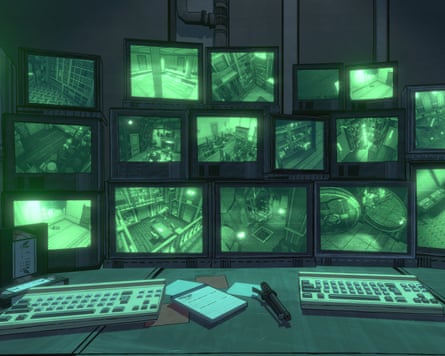
While Clair Obscur won the big prize, it didn’t sweep up as it did at the Game awards, where it won in nine categories – it also collected best debut game, and Jessica English won best performer in a leading role for her turn as Maelle. Dispatch, the superbly irreverent superhero call-centre comedy, also won three awards, including for animation and a supporting role prize for actor Jeffrey Wright, who played the prematurely ageing superhuman sprinter, Chase. It was beaten in the narrative category by the medieval open-world drama Kingdom Come: Deliverance II. The supremely enjoyable Ghost of Yōtei won for technical achievement and music.
Events such as the Baftas always help to refocus me as a games critic. They celebrate the many and various creative achievements of games – not how much money they make or how popular they are or what they indicate about the industry. Each nominated game is worth open-minded consideration as a piece of art. When delighted developers ascend a stage to receive an award, they almost unfailingly talk about how touched they were that people connected with the game they made. They thank the players for finding meaning in it and giving it their time and attention. They thank their fellow developers for bringing it to life. As the awards’ presenter Elz intimated when she talked about how games had helped her navigate her grief after losing her mother, game developers’ work is meaningful.

Every year I enjoy how refreshingly uncommercial gaming awards events are. Much more than the other creative industries, games are so often talked about in terms of pounds and dollars, or in terms of technological change (think how many conversations about games in the past couple of years have centred on whether and how developers should use generative AI). Our big events, from showcases to esports, are commercial hype machines that bear more resemblance to huge, branded sporting events than an arts festival.
It is important to consider games in terms of politics, culture, influence, economics and technology, but it’s also important to remember that they are works of art. As an arts charity, Bafta has different motivations than other entities that run gaming awards – part of that motivation being, of course, to increase its fee-paying membership among the makers of film, television and games. But it also makes a great show, every year, of treating games with respect.
What to play
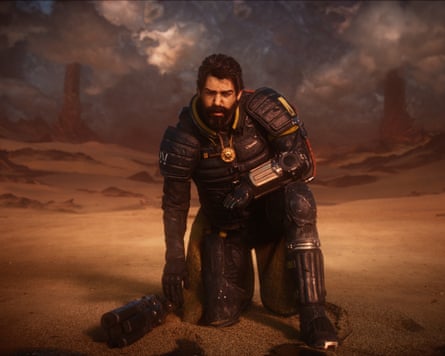
I have been greatly looking forward to Saros, the sort-of sequel to PlayStation 5 launch game Returnal (which, incidentally, won four Baftas in 2022). You step into the shoes of space-capitalist enforcer Arjun, sent to a distant and potentially very profitable planet where the colonists have gone dark. As you explore a planet that remixes itself every time you die, in search of answers, you will be holding your trigger finger down and dashing around in a panic as aliens spew orbs and beams of death at you from all directions.
Returnal was a pitilessly challenging shooter and a science-fiction masterpiece; fortunately for most people, Saros is more forgiving and easier to progress through, although it still gets my adrenaline going. Look for our review tomorrow on the games site.
Available on: PlayStation 5
Estimated playtime: 20 hours
What to read

-
Microsoft has just decreased the price of its PC and Xbox Game Pass subscription service – and announced that future Call of Duty games will not be in it (at least not on day one). Full details here.
-
In a livestream tomorrow, Ubisoft will show off its remake of piracy classic Assassin’s Creed IV: Black Flag – still my favourite Assassin’s Creed game all these years later.
-
The writer and professor Jake Steinberg argues in his Substack that it’s time to retire a tautology that you often find in game reviews: “video-gamey”. He writes: “It reports back the obvious and leaves the work untouched. Our task is not to point at mechanics, but to account for what they do. Not to say that a game feels like a game, but to show how it feels at all.”
-
In this challenging and extremely well-sourced article for the Baffler, Corey Pein asks whether increasing Saudi investment in the video games industry should be surprising, given how noticeably games had already been bending to corporate and propagandist influence.
What to click
-
‘People still remember it 40 years later’: the making of Chuckie Egg
-
What my zen week with a virtual power-washer taught me about gaming – and life | Imogen West-Knights
-
Clair Obscur and Dispatch share top honours at Bafta games awards
-
Pragmata review – soulful sad dad saga in stunning outer space | ★★★★☆
-
Replaced – nostalgic cyberpunk tribute has few ideas of its own | ★★★☆☆




 English (US)