
 10 hours ago
3
10 hours ago
3

3 hours ago
Philippa Goymerand Evie Lake,North East and Cumbria

 Philippa Goymer/BBC
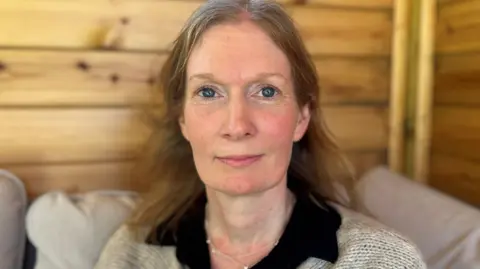
Katie Swinburne said her treatment was designed for another type of breast cancer
Silent vigils have been held by groups of women campaigning for more funding for lobular breast cancer research.
Katie Swinburne, 50, from near Barnard Castle in County Durham, said when she was diagnosed in 2023 she underwent a treatment programme which was tailored for the more common type - ductal breast cancer.
Research group, the Lobular Moon Shot Project, is calling on the government to fund a £20m research project into the basic biology of the disease.
A government spokesperson said they had met project members last week and are "determined to back research that could transform outcomes for patients".
The lobular form makes up 15% of all breast cancer cases, but campaigners said it was under-studied and under-recognised due to rarely forming a lump in the same way as other breast cancers.
Swinburne said she had never heard of the type before she was diagnosed and her mammogram was clear.
She had not found a lump, but noticed a slight change to her breast.
It was not until after she had an ultrasound and biopsy that she was diagnosed.
 Philippa Goymer/BBC
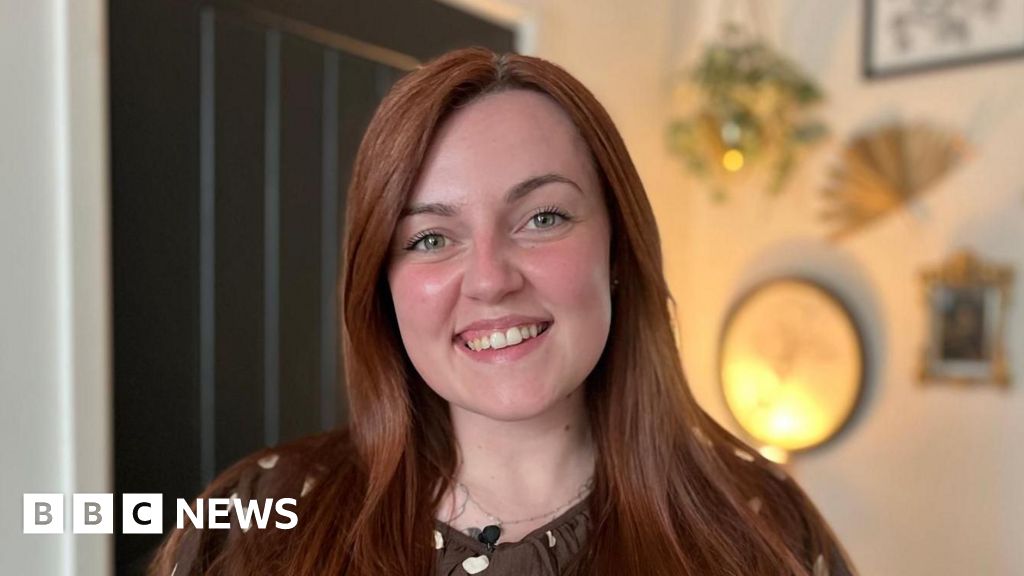
Melissa Robinson took part in the vigil for the "future generation"
"It's everybody's worst nightmare," she said.
The mum-of-three said she had surgery and found out it was stage three cancer.
She had four months of chemotherapy, oral therapy and radiation.
"We've known since the 70s that lobular breast cancer exists and is different, but it's been critically under-funded and under-researched," Swinburne said.
Melissa Robinson, from Guisborough, was also diagnosed with the disease in 2023.
The mum-of-three said she was "very thankful" she had found a lump.
The 50-year-old said: "It was a real shock.
"I assumed the lump I felt was a cyst and to be told you've got breast cancer was pretty heartbreaking."
Three separate vigils took place outside Downing Street, the Department of Science, Innovation and Technology and Department of Health and Social Care earlier.
At each location, 22 women gathered to highlight that 22 women are diagnosed with the type of cancer in the UK every day, Robinson said.
The group then met up outside Downing Street to sing You'll Never Walk Alone in memory of the project founder, Susan McKay.
"It's hard having to fight for a treatment, especially when you're undergoing chemotherapy, radiotherapy, and oral treatment," Swinburne said.
"To have to go to the other end of the country to fight, to have your voice heard so that you have a treatment that's specific for your disease.
"Having to fight really hard and not being listened to is exhausting."
Robinson said she felt it was important to take part in the vigil.
"I thought it was a great way to give something back and try and help others and the future generation," she said.
"I think it's an opportunity to do something positive."
The government spokesperson said: "Lobular breast cancer goes undetected in too many women and we are determined to back research that could transform outcomes for patients.
"Last week, Lord Vallance and Minister Hodgson, alongside government research funders, met the Lobular Moon Shot Project to discuss how best to progress research in this vital area.
"More broadly, our national cancer plan puts research at the heart of improving outcomes.
"It is bringing the latest scientific breakthroughs into the NHS faster so that patients benefit from earlier diagnosis, more effective treatments, and better quality of life."





 English (US)